
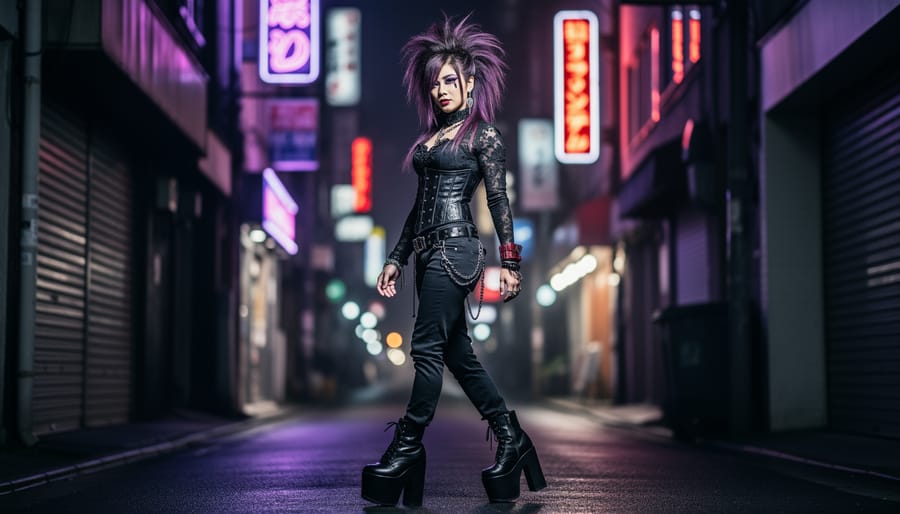
Visual kei fashion transforms anyone willing to embrace its theatrical spirit into a walking work of art through bold makeup, elaborate hairstyles, and gender-defying silhouettes that originated from Japan’s underground rock scene. This boundary-pushing style within Japanese street fashion isn’t about subtle nods to alternative culture. It demands attention through platform boots, corseted tops, dramatic eye makeup, and hair teased to impossible heights. The beauty of visual kei lies in its refusal to play by anyone’s rules, inviting you to mix Victorian elegance with punk rebellion, romantic lace with leather, pastel sweetness with gothic darkness.
What makes visual kei so empowering is its complete rejection of conventional beauty standards. You’re not just putting together an outfit; you’re crafting a persona that challenges every boring expectation about how women should dress. Since emerging from Tokyo’s live houses in the 1980s, visual kei has evolved into a global fashion movement that celebrates individuality and artistic expression. Whether you’re drawn to its darker gothic elements or its softer romantic aesthetics, this guide breaks down the essential elements so you can incorporate visual kei’s fearless energy into your everyday wardrobe.
What Makes Visual Kei Fashion Fearlessly Unique
Visual kei emerged in the 1980s Japanese rock scene when musicians like X Japan and Buck-Tick turned concerts into theatrical spectacles. The name itself, “visual style”, declared that appearance mattered as much as music. These artists rejected conformity by blending punk aggression with romantic elegance, creating looks so dramatic they became inseparable from the sound itself.
What started on Tokyo stages exploded into a global fashion movement because it offered something radical: permission to be whoever you wanted. Visual kei threw out the rulebook on gender presentation decades before mainstream fashion caught up. Men wore elaborate makeup and flowing garments alongside leather and spikes. Women adopted the same fearless approach, mixing feminine lace with masculine tailoring without apology.
This aesthetic resonates with today’s fashion-forward women because it celebrates contradictions. You can be soft and fierce, delicate and powerful, classic and avant-garde, all in one outfit. The visual kei approach to fashion is inherently empowering: it positions your clothing as a declaration of artistic rebellion rather than adherence to trends.
The movement evolved from niche subculture to global influence by inspiring designers, street style innovators, and anyone tired of fashion’s limiting categories. It proved that dramatic self-presentation isn’t costume, it’s confidence made visible.
How We Curated These Visual Kei Essentials
We didn’t choose these seven elements randomly. Each piece made our list because it passes three essential tests: wearability, authenticity, and transformative power.
First, accessibility matters. You won’t find us recommending full costumes or pieces that only work for concerts. Every element here integrates into your current wardrobe without demanding a complete style overhaul. These are the building blocks that let you experiment at your own pace.
Second, we prioritized visual kei’s true spirit over surface-level aesthetics. The elements featured here stem directly from the movement’s core values, gender fluidity, artistic rebellion, and fearless self-expression. They’re not watered-down versions but rather entry points that honor the culture’s rich heritage.
Finally, versatility sealed each choice. Whether you’re styling for a night out, a creative workplace, or weekend brunch, these pieces adapt. We looked for elements that scale from subtle nods to full dramatic statements, giving you control over how boldly you express yourself each day. This flexibility means you’re building a sustainable visual kei-inspired style that grows with your confidence.
1. Dramatic Eye Makeup That Commands Attention
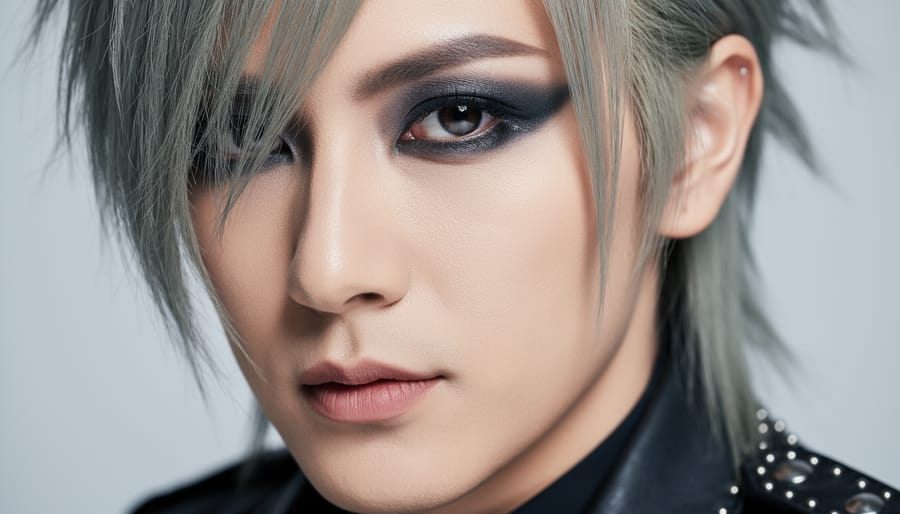
The eyes become the focal point in visual kei fashion, a canvas for rebellion, artistry, and unapologetic self-expression. This makeup approach transforms the conventional beauty playbook by celebrating darkness, smudging what should be precise, and amplifying what typical tutorials minimize. Heavy black eyeliner forms the foundation, applied generously along both upper and lower lash lines, then deliberately smudged outward to create that signature haunted, smoky intensity. Unlike Western makeup that prioritizes crisp wings and clean edges, visual kei eyes embrace controlled chaos, layered shadows in charcoal, deep plum, or midnight blue blended into gradient clouds that extend toward the temples.
Graphic shapes add another dimension of drama. Some visual kei icons draw sharp lines beneath the lower lashes, create exaggerated cat-eye flicks that reach toward hairlines, or add small dots and dashes at the outer corners for an editorial edge. The theatrical version might include white liner on the waterline to create an unsettling contrast, or colored accents that shift the entire mood. For everyday wearability, scale back to one statement element: keep the smoky gradient but skip the graphic details, or do a bold winged liner with minimal shadow. The Vibely mascara review highlights how this under-$10 mascara delivers the dramatic lash volume visual kei demands without expensive salon treatments.
- Start with waterproof gel or pencil liner for easier smudging before it sets
- Build shadow intensity gradually using a fluffy brush and small circular motions
- For daytime, concentrate drama on the outer third of the eye only
- Avoid overpowdering, visual kei eyes need some dewiness to prevent a flat, cakey finish
- Set with translucent powder only where you want definition, not the entire eye area
This eye makeup empowers because it refuses to make you palatable or pretty in traditional ways. It commands attention rather than seeking approval, much like the broader aesthetic differences explored in J-A vs Kaja fashion interpretations. When you darken your eyes this boldly, you claim space, project confidence, and signal that you set your own beauty standards.
2. Layered Chains and Statement Jewelry
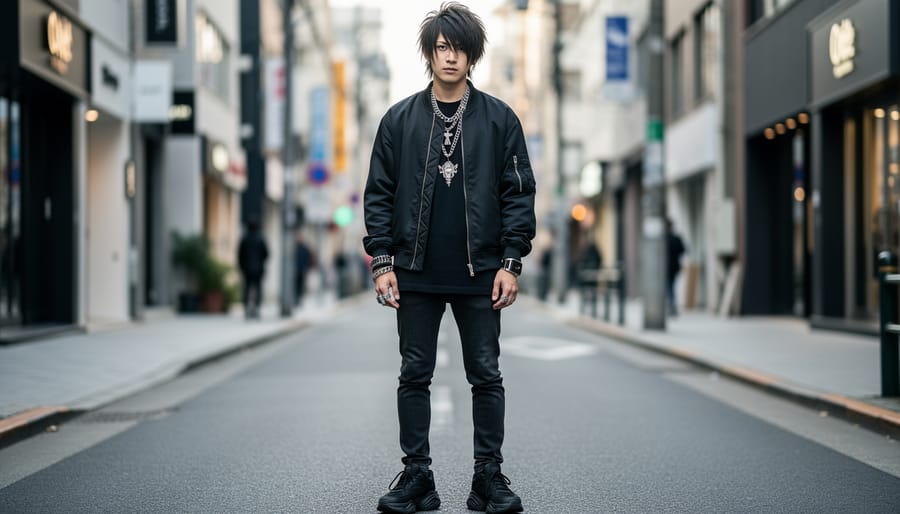
Visual kei accessories aren’t just embellishments, they’re weapons of self-expression. The aesthetic embraces a fearless maximalism where chokers stack against pendant necklaces, chain bracelets cascade down wrists, and rings claim every finger. Mixed metals clash intentionally: oxidized silver against polished chrome, gunmetal against brass. Religious iconography mingles with industrial hardware, crosses dangle beside safety pins, rosaries intertwine with spiked leather cuffs.
This layered approach transforms accessories into armor. Each piece becomes a deliberate choice, a statement about who you are rather than what’s trending. Visual kei pioneers understood that weight around your neck and wrists creates physical presence, a tangible reminder of your power to define yourself.
Start small if the full aesthetic feels intimidating. Add a chunky chain necklace to your usual outfit, then layer a thinner choker above it. Stack three delicate rings before graduating to statement pieces. The key is intentional chaos, nothing should look accidentally thrown together, yet the combination shouldn’t feel overly coordinated.
Mix eras and styles freely. Vintage cameo brooches pinned to leather jackets. Delicate religious medals layered with chunky chain links. The contrast creates visual tension that captures attention without words. Your accessories speak before you do, announcing that you refuse to be confined by conventional taste or timid styling choices.
3. Platform Boots That Elevate Everything
Platform boots are the foundation, literally, of visual kei style. These aren’t subtle kitten heels. We’re talking towering soles that add three to five inches of height, creating an imposing silhouette that commands attention the moment you walk into a room.
The classic visual kei boot features chunky platforms with multiple buckles cascading down the shin, heavy-duty straps, and industrial hardware that clanks when you move. Brands like New Rock and Demonia built their reputations on this aesthetic, creating boots that feel equal parts armor and art. The weight alone changes how you carry yourself, there’s no shrinking when you’re wearing five pounds of leather and steel on each foot.
But you don’t need to drop $300 on authentic New Rocks to capture this energy. Start with more accessible brands like UNIF, Killstar, or even Dolls Kill’s house label. Look for boots with at least a two-inch platform, visible hardware details, and a silhouette that leans chunky rather than sleek. Black leather remains the go-to, though patent finishes and metallics add visual interest.
Style them with distressed jeans and an oversized band tee for casual edge, or contrast them against feminine dresses to nail that visual kei tension between hard and soft. The extra height isn’t just physical, it’s psychological armor that shifts how you inhabit space and refuse to be overlooked.
4. Asymmetrical Cuts and Deconstructed Silhouettes
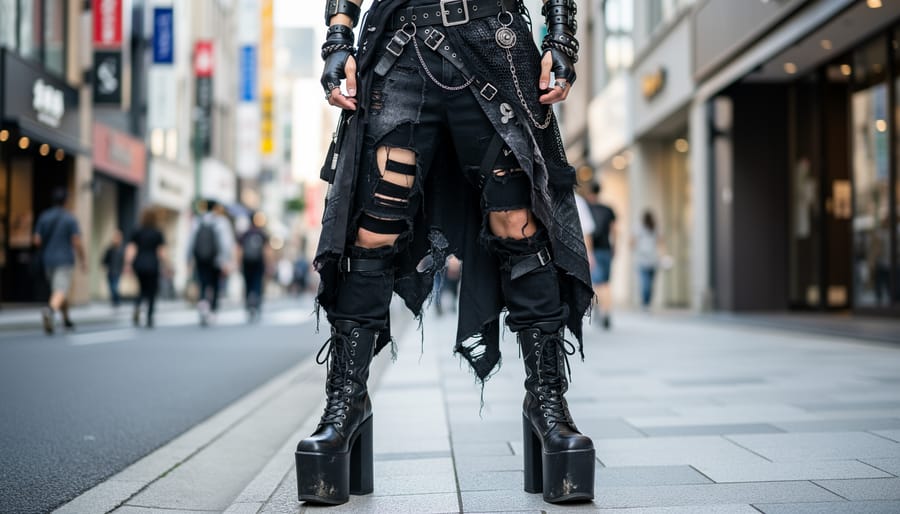
Visual kei clothing treats fabric like rebellion, cuts that refuse to follow straight lines, hems that end exactly where designers shouldn’t let them, and seams left deliberately raw and exposed. These aren’t mistakes or damage. They’re intentional architectural statements that transform your body into a canvas where asymmetry becomes the whole point.
The off-shoulder top in visual kei goes beyond the sweet, romantic versions you’ve seen everywhere. One sleeve might extend past your fingertips while the other ends abruptly at your shoulder. The neckline slides down your arm at an angle that makes photographers take notice. Pair an asymmetrical off-shoulder with high-waisted black jeans and your platform boots, the contrast between the chaotic top edge and clean bottom half creates visual tension that works.
Asymmetrical hems add drama without trying too hard. A skirt that dips lower on one side, a shirt with jagged triangular cuts at the bottom, or a jacket with mismatched lengths between front and back panels, these pieces challenge the expectation that clothing should be balanced and predictable. Start with one asymmetrical hem piece in your outfit, keep everything else streamlined, and let that irregular edge do the talking.
Torn details and frayed edges aren’t grunge carelessness, they’re precision. Visual kei treats strategic distressing like jewelry placement. A carefully shredded sleeve, deliberate holes that reveal a contrasting layer underneath, or raw hems that unravel just enough create texture and movement. These imperfections say you make your own rules about what “finished” means.
Layer a deconstructed vest over a fitted turtleneck, add asymmetrical jewelry, and you’re wearing architecture that refuses to apologize for its edges.
5. Bold Hair Color and Statement Styling
Visual kei hair is where rebellion meets artistry, think jet black depths that swallow light, platinum blonde so bright it glows, or electric colors that announce your presence before you speak. This isn’t about trends. It’s about claiming space with every strand, defying gravity, and refusing to blend into the background.
The visual kei color palette operates in extremes. Inky black remains the foundation, often paired with stark white or platinum streaks that create dimensional contrast. But where the aesthetic truly ignites is in jewel tones, deep crimson, violet, electric blue, or emerald green. These aren’t pastel whispers; they’re saturated statements. Many visual kei enthusiasts layer colors through strategic streaks or underlayers, creating depth that reveals itself with movement.
Achieving these looks demands commitment. For jet black, opt for semi-permanent formulas that enhance natural depth without the harsh damage of permanent dyes. Platinum requires professional bleaching, attempting this at home on dark hair risks breakage and brassy results. If you’re testing the waters, clip-in extensions in bold colors let you experiment without permanent commitment.
Volume is non-negotiable in visual kei styling. The iconic teased, gravity-defying shapes aren’t accidents, they’re architectural achievements. Start with texturizing spray on dry hair, then backcomb in small sections from mid-length to roots. Set with strong-hold hairspray, and don’t be afraid of excess. This aesthetic celebrates exaggeration.
Maya, a Tokyo-based graphic designer, credits her transformation to crimson-streaked black hair with reigniting her creative confidence after years in corporate beige. “I stopped apologizing for taking up space,” she shares. “My hair became my armor.” That’s the power of visual kei hair, it’s not decoration. It’s declaration.
6. Mixing Masculine and Feminine Elements
Visual kei’s most revolutionary contribution to street fashion isn’t any single garment, it’s the fearless blending of masculine and feminine codes that shatters conventional dressing rules. This aesthetic refuses to recognize gendered boundaries, creating looks that draw power from contrast and contradiction.
Start with structural pieces typically coded masculine: an oversized black blazer with exaggerated shoulders, tailored trousers with chain detailing, or a leather biker jacket. Then layer in traditionally feminine elements, a lace camisole peeking beneath that blazer, ruffled cuffs extending past jacket sleeves, or a sheer mesh top under distressed denim. The tension between hard and soft creates visual intrigue while challenging outdated fashion binaries.
Concrete outfit formulas make this approach wearable. Pair chunky platform boots with a flowing lace skirt and studded leather vest. Combine a crisp white button-down (styled oversized and loose) with a corset belt and ripped fishnet tights. Layer a delicate velvet choker over a band tee worn under suspenders. Mix patent leather shorts with sheer black stockings and an oversized cardigan dripping with safety pins.
This gender-fluid aesthetic has gained massive visibility as creators demonstrate how it works on TikTok inspiring a new generation to experiment beyond binary fashion constraints.
The empowerment here runs deeper than style. When you pair a masculine blazer with feminine lace, you’re declaring that your identity isn’t confined to society’s narrow categories. You choose elements that resonate with your spirit rather than your assigned gender presentation. Visual kei teaches that strength and softness coexist beautifully, that you contain multitudes, and that authentic style transcends arbitrary rules about who should wear what.
7. Dark Romantic Fabrics: Lace, Leather, and Velvet
Visual kei’s material choices aren’t accidental, they’re deliberate armor that transforms how you move through the world. Lace, leather, and velvet form the holy trinity of this aesthetic because each carries weight, both physically and psychologically. When you slip into a velvet blazer or wrap yourself in leather, you’re choosing fabrics that announce your presence before you speak.
Lace in visual kei defies its delicate reputation. Instead of dainty florals, think geometric patterns in black, oversized mesh details on sleeves, or sheer panels that reveal strategically. Layer lace tops under leather jackets or choose lace-trimmed accessories that add texture without reading as traditionally feminine. Thrift stores and alternative brands stock Edwardian-inspired lace pieces perfect for this aesthetic.
Leather brings edge and structure, essential for balancing softer elements. Start with a quality leather jacket (genuine or vegan) as your foundation piece. Incorporate leather through gloves, chokers, or pants that pair surprisingly well with flowing fabrics. The material’s slight sheen and weight create visual contrast that defines visual kei styling.
Velvet adds depth through light absorption and richness. Choose darker jewel tones, burgundy, forest green, midnight blue, alongside classic black. A velvet skirt transforms with platform boots, while velvet details on collars or cuffs elevate basic pieces.
These fabrics command attention because they interact with light differently than cotton or polyester. They photograph dramatically, move with intention, and remind you to carry yourself accordingly. That’s their real power.
Making Visual Kei Work for Your Personal Style
Start with one element that genuinely excites you, maybe it’s a single chain necklace, darker eye makeup, or platform sneakers instead of full boots. Wear it with your current wardrobe and notice how it shifts your energy before adding more. Visual kei isn’t about transforming overnight; it’s about discovering which elements amplify your existing style rather than fighting against it.
For professional environments, adapt rather than abandon the aesthetic. Trade towering platforms for chunky-soled oxfords, wear a subtle asymmetrical hem under a blazer, or keep bold makeup limited to dramatic liner with neutral lips. Many visual kei devotees maintain a “day version” and “night version” of their style, switching intensity based on context without sacrificing their identity entirely.
Can I wear visual kei fashion to work?
Absolutely, start with toned-down elements like asymmetrical cuts under structured pieces, dark monochrome palettes, or subtle silver jewelry. Save the dramatic makeup and platforms for after-hours.
How do I start without looking costumey?
Mix one visual kei piece with familiar basics rather than head-to-toe looks. A statement chain with jeans and a tee, or platform boots with simple black pants, reads as intentional style rather than costume.
Where can I shop for authentic pieces?
Check Japanese streetwear retailers like ACDC Rag or Closet Child online, explore alternative fashion brands like Killstar or Disturbia, and don’t overlook thrift stores for leather, velvet, and vintage chains.
How do I handle judgment from others?
Remember that visual kei exists precisely to challenge conventional beauty standards. The discomfort others feel is about their limitations, not your choices, your confidence will grow with each wear.
Finding your community makes the journey easier. Instagram hashtags like #visualkeifashion and #jfashion connect you with others experimenting with the aesthetic, while Discord servers and local alternative fashion meetups provide real support and styling inspiration. These spaces normalize bold choices and offer practical advice from people who’ve navigated similar style evolutions.
The key is consistency over perfection. Wearing a single visual kei element regularly builds more authentic style than occasional full looks that feel forced. Let your visual kei identity develop naturally, shaped by what makes you feel powerful rather than what looks most dramatic. This aesthetic rewards those who use it for self-discovery, not imitation.
Visual kei fashion transcends mere clothing, it’s a powerful declaration of who you are and who you’re becoming. By incorporating these dramatic elements into your wardrobe, you’re not just following a trend. You’re joining a global movement of women who refuse to be confined by conventional style rules or societal expectations of how femininity should look.
The beauty of visual kei lies in its invitation to experiment without limits. You don’t need to adopt every element overnight or commit to a complete aesthetic transformation. Start with the pieces that speak to your spirit, maybe it’s those platform boots that make you feel invincible, or the bold eyeliner that channels your inner rebel. Let your visual kei journey unfold organically, guided by what makes you feel most authentically yourself.
Remember, the most empowering outfit you’ll ever wear is the one that reflects your true identity without apology. Visual kei fashion gives you permission to be dramatic, androgynous, romantic, and rebellious all at once. Own your edge. Celebrate your contradictions. Your style is your story, make it unforgettable.
You may also like
-
Kiyoko Beauty: The Japanese Skincare Philosophy Redefining Women’s Beauty in 2026
-
A Ja Fashion vs. Kaja Fashion: What’s Behind the Search Confusion?
-
Lash Cosmetics Vibely Mascara Review: Extension-Like Results for Under $10?
-
What Is Japanese Street Fashion? (and How It Works on TikTok)
-
Five Healthy Food to Help Grow the Skin