
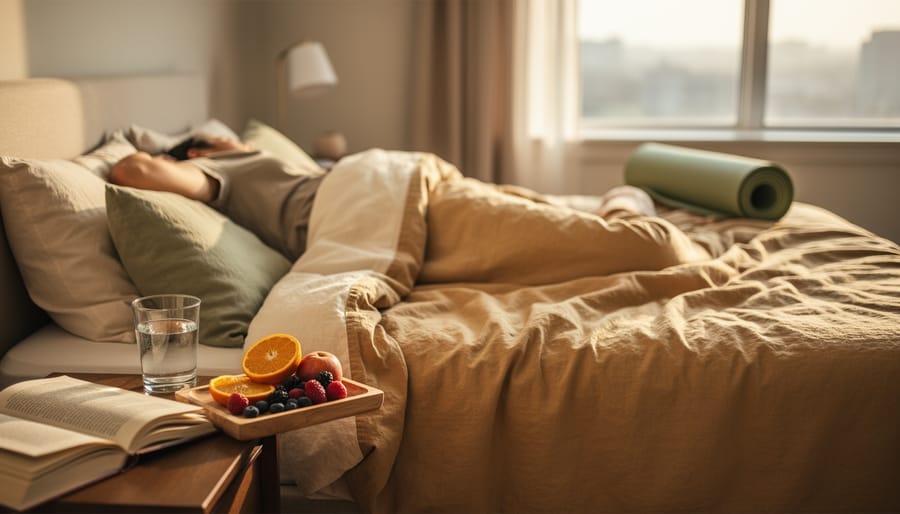
Seven lifestyle factors shape how good you feel day to day: sleep, movement, food, stress management, community, screen habits, and the style and self-care rituals that make you feel like yourself. Get these right and the rest of your life, from your skin to your mood to your outfit confidence, tends to follow.
We picked these seven because they show up again and again in mainstream wellness guidance, they’re within your control, and they don’t require a total life overhaul. Each one connects to something we care about here: how you look, how you feel, and who you’ve got in your corner. No rigid rules, no one-size-fits-all routine, and no medical promises. Just practical ways to make daily habits work for the life you actually live.
Think of it as the difference between a trend and a signature look. Crash plans fade fast. Simple lifestyle changes stick because they fit your schedule, your budget, your culture, and your taste.
Below, you’ll find all seven factors in order, each with easy tips you can try this week. Start with the one that feels most doable. Small, consistent shifts are what build the kind of confidence that shows up in everything you wear and everything you do.
How We Picked These 7 Factors (No Wellness Guru Required)
Before we dive in, here’s how these seven made the cut. We skipped the expensive trends and the “5 AM, ice bath, green juice” mythology. Instead, we looked at what mainstream, widely accepted health guidance keeps pointing back to, then asked a simple question: could a real person with a real schedule actually do this?
- Simple to start, with no complicated setup or special expertise.
- Low cost, so no pricey gear, memberships or gadgets required.
- Flexible enough to fit different bodies, budgets, cultures and schedules.
- Grounded in general health guidance rather than fads.
- Sustainable long term, built on small habits instead of perfection.
That last point matters most. A habit you can repeat on a messy Tuesday beats a perfect routine you abandon by Thursday. We also kept room for your own traditions. Your grandmother’s tea ritual, the foods you grew up on, a walk with your crew after dinner: all of that counts as wellness here. There’s no single “right” way to live well, and nobody needs to look or eat or move like anyone else to belong.
One more thing, said with love: this is general lifestyle inspiration, not medical advice. If you’re dealing with a health concern, a lingering symptom or something that just feels off, check in with a healthcare professional who knows your story.
1. Sleep: The Original Glow-Up

Sleep is the quiet foundation under everything else on this list. When you’re consistently rested, your mood evens out, your focus sharpens, and your skin tends to look calmer and brighter. When you’re not, even your best outfit can’t hide that foggy, running-on-fumes feeling. And no, it’s not about being perfect. One rough night doesn’t undo anything.
The easiest place to start is a steady wind-down. Pick a rough bedtime and a rough wake-up time, then protect them most days, weekends included if you can. Your body loves a rhythm.
Next, give your phone a curfew. Aim for thirty minutes of screen-free time before bed, and let your charger live across the room. Fill that gap with something soft: a few pages of a book, a gentle stretch, a warm shower.
Then set the scene. A cool, dark room makes it easier to drift off, so try blackout curtains or a simple sleep mask.
Here’s where it gets fun. Make it a ritual instead of a chore. Slip on a silk pillowcase, dim the lights, and press play on a mellow playlist you only listen to at night. Suddenly bedtime feels less like an obligation and more like the best appointment of your day. Start with one change and let it become yours.
2. Movement You Actually Look Forward To
Forget the punishment-workout mindset. Movement counts when it feels good enough that you’ll actually do it again tomorrow. That might be a long walk through your neighborhood in the sneakers you’d happily wear to a gallery opening, a three-song dance break between meetings, a studio class with a great playlist, or a slow stretch while your laptop loads. Consistency beats intensity every time, so a ten-minute habit you keep will do more for your energy and mood than a brutal session you dread and abandon.
Every body and every ability level belongs here. Movement might mean wheelchair-friendly dance, chair yoga, gentle swimming, or simply pacing the room during a phone call. There’s no required outfit, pace, or fitness level. Pick what your body enjoys today and let that be enough.
Take Mika, a designer who spent most of her twenties glued to her desk and convinced gyms weren’t for her. A coworker invited her to a Saturday-morning walking crew that wandered through different neighborhoods, stopping for coffee and vintage shop browsing along the way. She went for the company. She stayed because her week suddenly had a shape, and because the group cheered her on when she showed up in thrifted jackets and high-top sneakers. Months later, she’d gone from reluctant newcomer to the person who plans the route.
Start small, stay curious, and follow the joy.
3. Eating in a Way That Feels Good, Not Restrictive
Think of your plate as a place to add things, not a list of rules. Start with what you can bring in: something green, something colorful, a source of protein, and a carb you actually enjoy. When a meal looks like a little rainbow, you’re usually covering more nutritional bases without counting anything.
Regular meals matter more than most of us admit. Skipping breakfast and surviving on coffee until 3 p.m. tends to end in a snack spiral and a foggy afternoon. Eating at fairly steady times keeps your energy even, and your mood often follows. Keep water within reach too. A bottle on your desk or a cup of barley tea beside you makes hydration automatic instead of another task.
Your own food culture belongs here. A bowl of rice with miso soup, grilled fish, natto, pickles, or a warm onigiri is real nourishment, and so is your family’s recipe, whatever cuisine it comes from. Convenience stores can work for you, too. A tamago sandwich plus a salad and a yogurt is a balanced lunch when you’re sprinting between errands. Add a piece of fruit and call it a win.
Skin and hair often reflect overall habits, including sleep, water and how you eat, but no single food is a miracle fix. Skip the guilt and the body policing. Eating well should feel like taking care of yourself, not punishing yourself.
4. Stress Management and Mental Reset Moments

Hustle culture tells young women that rest is something you earn after the to-do list is done. It never is. So build tiny reset moments into the day instead of waiting for a perfect calm that never shows up.
Start with five minutes of slow breathing. Inhale for four counts, exhale for six, and do it on the train, in a bathroom stall, or before a big meeting. It’s quick, free, and nobody has to know.
Try journaling too. Spill the messy thoughts onto a page before bed, no grammar police allowed. Even three lines can clear mental clutter.
Then there’s the underrated power of “no.” Declining an extra project or a plan you’re dreading doesn’t need a long apology. “I can’t take that on right now” is a complete sentence. At work, set small boundaries you can actually keep, like logging off at a set hour or muting notifications after dinner.
Creative outlets count as stress relief, too. Sketch on your lunch break, fold a tiny zine from your favorite street snaps, or curate a playlist that matches your mood. Making something for no audience at all is a reset in itself.
Some weeks, no amount of breathing exercises will be enough, and that’s okay. Asking for help is part of looking after yourself.
5. Your Circle: Community and Connection
You don’t have to be a social butterfly to feel the difference connection makes. Research on well-being keeps landing on the same quiet truth: people who feel supported tend to cope better with stress, and they usually feel less alone in the hard weeks. Your circle can be old friends, a mentor you admire, a group chat that never sleeps, or a chosen family that understands you in ways your hometown never did. All of it counts.
Start small and make it routine. A standing weekly meetup, even a thirty-minute coffee or a Sunday thrift run, gives you something to look forward to. Showing up regularly matters more than planning anything fancy.
Look for people who share your creative spark, too. Joining a local fashion or art collective, a styling swap, a zine club or a sketch night puts you in rooms where ideas bounce around and nobody asks you to shrink. Those shared spaces are where confidence quietly grows.
Then do the easy thing you’ve been putting off: text the friend you’ve been missing. “Thinking of you, free this week?” is plenty. Busy doesn’t mean you stopped caring.
And cheer loudly for other women. Share their launches, comment on their wins, hype the outfit. Celebrating each other builds a community where everyone’s glow gets brighter, and your own is part of it.
6. A Healthier Relationship With Your Screen
Doomscrolling has a way of turning ten minutes into an hour. One minute you’re checking a message, the next you’re comparing your outfit to a stranger’s perfectly lit mirror selfie and wondering why your closet suddenly feels boring. That’s comparison culture, and trend fatigue is its tired sibling: the nagging sense that you need a new aesthetic every week.
Start by curating your feed like you’d edit a wardrobe. Unfollow accounts that leave you feeling less-than, and keep the ones that spark ideas. A feed full of Japanese street fashion can be genuine inspiration, as long as you treat it as a mood board and not a checklist.
Then add some gentle friction. Set app time limits, even generous ones, and claim a phone-free window each morning. Even twenty minutes of coffee, stretching or just looking out the window lets your own thoughts arrive before everyone else’s.
Finally, flip the script on what social media is for. Use it as a creative tool: save the looks you love, test a bold combination like a visual kei style accent, share your own take. It’s not a scoreboard. The same applies to routines like the Japanese skincare philosophy which is about care, not perfection. When you stop chasing every micro-trend, your style gets sharper, and so does your confidence.
7. Style and Self-Care Rituals That Boost Confidence
Getting dressed is the one ritual almost everyone does daily, which makes it a surprisingly powerful place to practice self-respect. Think of your morning routine as a small promise: I’m worth the time. Pair it with the well-being basics above, and style stops being surface-level and starts feeling like care.
Start with skincare you genuinely enjoy. It doesn’t need ten steps or a luxury price tag. A gentle cleanser, moisturizer and sunscreen you love using beats an elaborate shelf you dread. The point is the pause, those two minutes where you’re simply looking after yourself.
Then there’s the outfit. Wear the thing that makes you stand a little taller, whether that’s oversized denim, a sharp blazer, vintage florals or head-to-toe black. Power looks different on everyone, and nobody gets to hand you the rulebook.
Thrifting and upcycling make this even more personal. Hunting through secondhand racks, taking in a hem or customizing a jacket with patches gives your closet a story, and it’s kinder to the planet too.
Try a Sunday reset: put on music, do a face mask, lay out a few outfits, and breathe. Rituals like this turn style into steadiness. Across every body type, background and aesthetic, the goal stays the same: dress and care for yourself in ways that make you feel like you.
Seven Small Habits, One Stronger You: Quick Answers
Where do I start if all seven feel like too much?
Pick the one that feels easiest, not the one that sounds most impressive. A tiny win, like a ten-minute walk or an earlier lights-out, builds momentum faster than a perfect plan you abandon by Thursday.
How many habits should I try at once?
One or two is plenty. Let a habit feel automatic before you stack another on top.
How long until I notice a difference?
It varies for everyone, so try not to hold yourself to a deadline. Many people notice small shifts in mood or energy before anything else, but treat that as a bonus rather than a scorecard.
What if I’m having a low-energy week?
Shrink the habit instead of skipping it. A five-minute stretch or a glass of water still counts, and rest is part of the plan.
Staying consistent on a tight budget is easier than the wellness internet makes it look. Walking, journaling, thrifting a favorite outfit, and texting a friend cost nothing, and they do the heavy lifting here.
Well-being isn’t a single dramatic overhaul. It’s the quiet stack of small, repeatable choices: the earlier lights-out, the walk you actually enjoy, the plate that feels good, the breath you take before replying, the friend you finally text back, the scroll you cut short, and the outfit that feels like you. None of it has to be perfect to count.
So here’s your invitation: pick just one of these seven factors and start there this week. Not all seven, not by Monday, just one.
Your wellness story belongs to you. Write it in your own words, at your own pace, in your own favorite sneakers. Nobody else gets to set the plot.
You may also like
-
How to Transform Your Well-being Through Simple Lifestyle Changes
-
Kiyoko Beauty: The Japanese Skincare Philosophy Redefining Women’s Beauty in 2026
-
7 Visual Kei Fashion Elements to Transform Your Streetwear Edge
-
A Ja Fashion vs. Kaja Fashion: What’s Behind the Search Confusion?
-
Lash Cosmetics Vibely Mascara Review: Extension-Like Results for Under $10?