
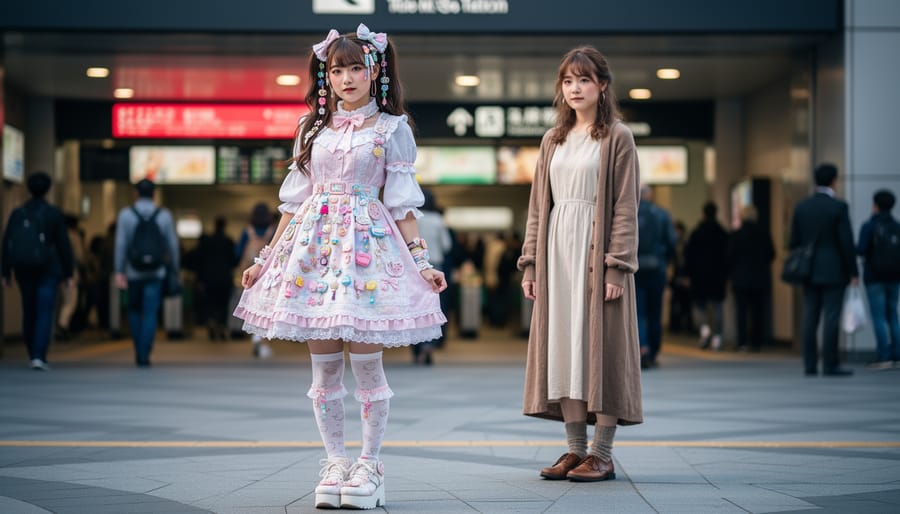
Japanese fashion styles are distinct aesthetic movements rooted in Tokyo’s street culture that blend traditional elements with contemporary rebellion, self-expression, and meticulous attention to detail. What began in the youth-driven neighborhoods of Harajuku and Shibuya has evolved into a global phenomenon, with TikTok amplifying these styles to millions of screens worldwide in 2026.
If you’ve been scrolling through your feed and spotted someone in head-to-toe Lolita frills, layered Decora accessories, or minimalist Mori Kei earth tones, you’re witnessing a cultural exchange that’s reshaping how young women approach personal style. These aren’t costumes or fleeting trends. They’re fully realized fashion philosophies, each with its own rules, history, and community of dedicated followers who see clothing as a form of storytelling.
The explosion of Japanese fashion on TikTok has created both opportunity and confusion. You’re drawn to the aesthetic, but you’re not quite sure what you’re looking at or how to translate it into your own wardrobe without veering into appropriation. Maybe you’ve saved dozens of outfit videos but don’t know where to start, or you’re curious about the cultural context behind the platform shoes and parasols.
This guide breaks down the major Japanese fashion styles dominating your algorithm right now, explains the history and philosophy behind each movement, and gives you practical styling advice for incorporating these elements authentically. You’ll learn to distinguish Fairy Kei from Yami Kawaii, understand why certain accessories matter, and discover how to participate respectfully in a style movement that celebrates individuality above all else.
What Is Japanese Street Fashion?
Japanese street fashion is a dynamic cultural movement that emerged from Tokyo’s youth districts as a deliberate rejection of mainstream fashion rules and corporate uniformity. At its core, this phenomenon represents young people claiming the streets as their runway, using clothing to broadcast identity, challenge social norms, and build communities around shared aesthetics. Unlike traditional fashion dictated by designers and seasonal collections, Japanese street fashion evolves from the ground up, with individual creativity and subculture belonging driving what becomes popular.
The movement’s spiritual home is Harajuku, a Tokyo neighborhood that became synonymous with bold self-expression in the 1990s. Every Sunday, teenagers would gather on Harajuku’s pedestrian bridge, dressed in outfits ranging from gothic Lolita frills to punk-inspired rebellion, turning public space into a living fashion exhibition. This wasn’t just about looking different. It was performance, community, and a statement that you could define yourself outside Japan’s famously conformist society. Shibuya, with its massive intersection and youth-focused shopping districts, became another epicenter where street style flourished alongside music subcultures and nightlife.
- Harajuku
- Tokyo’s iconic fashion district where youth subcultures gathered to showcase experimental, individualistic styles that rejected mainstream conventions.
- Kawaii Culture
- The Japanese aesthetic celebrating cuteness, innocence, and playfulness through pastels, childlike accessories, and deliberately soft, non-threatening presentation.
- Streetwear Fusion
- The blending of casual, comfort-focused clothing with high-fashion elements, creating unexpected combinations that challenge traditional style hierarchies.
- Subculture Fashion
- Clothing choices that signal membership in specific communities, from visual kei to gyaru, using appearance as tribal identity and shared values.
- TikTok Fashion Communities
- Digital spaces where creators share styling tutorials, outfit transformations, and aesthetic inspiration, democratizing access to niche fashion knowledge globally.
What started as a localized Tokyo phenomenon has exploded into global consciousness, largely through TikTok’s visual-first platform. The app’s algorithm favors striking aesthetics and rapid-fire outfit content, making Japanese street fashion’s inherently photogenic, transformative nature perfect for viral spread. Young women worldwide now access Harajuku street fashion history and contemporary Tokyo styles through their phones, recreating looks and developing their own interpretations without ever visiting Japan. This digital evolution has transformed Japanese street fashion from a geographic movement into a borderless aesthetic language that celebrates individuality, creativity, and the courage to stand out.
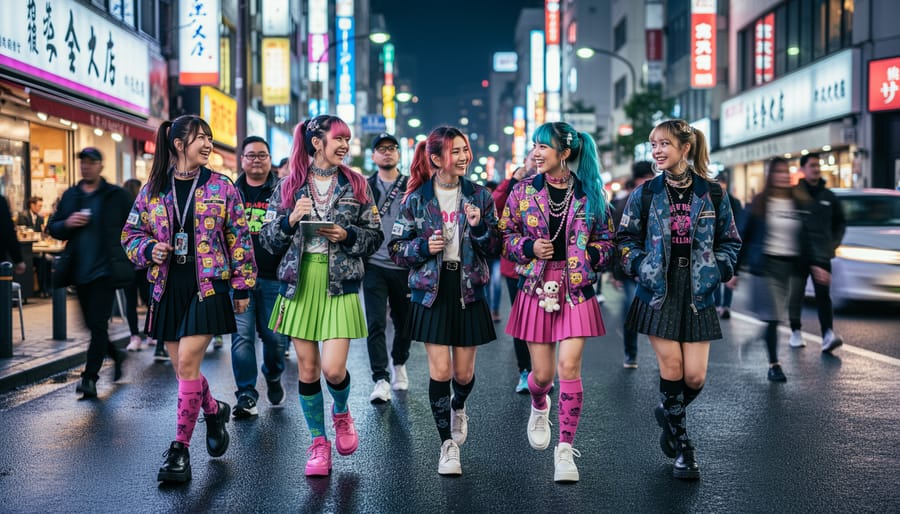
How Japanese Street Fashion Works on TikTok
The Creator-Driven Fashion Ecosystem
Tokyo-based creators like Ami Nakamura and Rina Fukushi don’t just post outfits, they curate entire aesthetic universes, building loyal followings by consistently showcasing a signature style and sharing the philosophy behind their fashion choices. These women become cultural translators, explaining the nuances of Harajuku kawaii or techwear to international audiences while maintaining authenticity to their roots. The TikTok algorithm and design rewards this consistency, pushing specialized content to niche communities hungry for specific aesthetics.
What’s revolutionary is how everyday women outside Tokyo have claimed authority in this space. A college student in Melbourne documenting her gradual shift into dark academia-Tokyo fusion gains credibility through vulnerability and repetition, showing styling failures alongside successes, explaining thrift finds, and responding to questions with genuine expertise. Unlike traditional fashion gatekeepers, these creator-authorities build trust through relatability and transparency. They share budget breakdowns, try affordable alternatives to luxury pieces, and demonstrate how to adapt Tokyo street styles for different climates and body types.
International creators often collaborate with Tokyo-based influencers, creating a feedback loop where Western interpretations circle back to Japan and inspire new hybrid styles. This ecosystem thrives on mutual respect and exchange rather than one-directional imitation, with creators crediting their inspirations and celebrating cross-cultural fashion conversations that feel genuinely collaborative.
From Tokyo Streets to Global Feeds
A street style trend’s journey from Tokyo to your TikTok feed happens at breakneck speed in 2026. What once took fashion magazines months to document now unfolds in days. A creator spots someone wearing an oversized blazer with platform Mary Janes outside Laforet Harajuku on Tuesday morning. By Tuesday afternoon, she’s posted the look with #TokyoStreetStyle. Within 48 hours, that video reaches fashion enthusiasts across Seoul, London, and Los Angeles. By the weekend, creators in different time zones are posting their own interpretations.
This acceleration has fundamentally changed how Japanese street fashion evolves. Trends no longer move in one direction from Tokyo outward. Instead, they become part of a global conversation where a Swedish creator’s twist on a Shibuya look might influence what someone wears in Osaka next month. The aesthetic gets remixed, adapted to different body types, climates, and budgets as it spreads.
What makes a trend stick versus fade varies. Styles that offer clear visual impact in a three-second scroll, bold silhouettes, unexpected color combinations, distinctive accessories, gain traction fastest. But lasting trends provide room for personal interpretation. The revival of loose socks and platform loafers succeeded because creators could adapt the proportions to their existing wardrobes rather than buying everything new.
Cross-cultural adaptation happens organically as creators blend Japanese street fashion principles with their local context, creating hybrid aesthetics that feel both globally connected and personally authentic.
Types of Japanese Street Fashion Styles
Harajuku Kawaii
Harajuku Kawaii remains the most instantly recognizable Japanese street fashion aesthetic, built on pastel color palettes, excessive layering, and a deliberate embrace of childlike innocence. Think baby pink cardigans over lavender blouses paired with pleated skirts, knee-high socks in clashing patterns, and platform Mary Janes. The aesthetic celebrates accessories as essential elements, oversized bows, character bags, colorful hair clips stacked together, and statement jewelry create visual complexity that defines the look.
On TikTok in 2026, creators have pushed Kawaii beyond its traditional boundaries. You’ll see modern interpretations mixing streetwear elements like chunky sneakers with classic Kawaii pieces, or toning down the color intensity with cream and soft beige while maintaining the layered, accessory-heavy approach. The platform’s favorite iteration balances nostalgic 2000s Harajuku energy with contemporary silhouettes, cropped cardigans instead of oversized ones, strategic layering rather than maximum volume. This evolution makes Kawaii more wearable for everyday life while preserving its core philosophy: fashion as joyful, unapologetic self-expression.
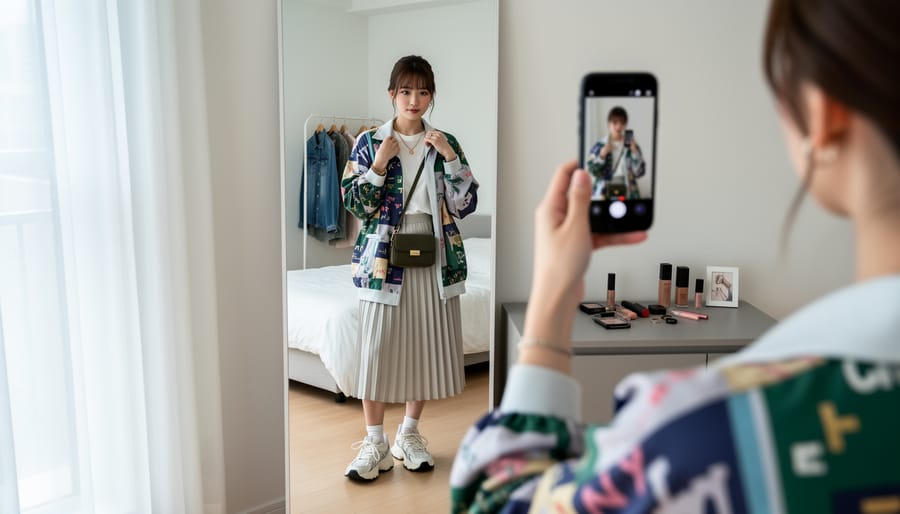
Dark Academia meets Tokyo
This refined aesthetic blends the intellectual mood of Dark Academia with Tokyo’s meticulous tailoring standards. Picture crisp white button-downs layered under perfectly structured blazers in charcoal or deep navy, paired with pleated midi skirts that move with purpose. The Japanese interpretation emphasizes impeccable fit and quality fabrics over costume-like styling.
Tokyo creators add sophistication through subtle details: a cashmere scarf draped just so, vintage leather loafers polished to perfection, or a structured satchel that suggests both function and thoughtfulness. The color palette stays restrained, think camel, cream, forest green, and burgundy, but the silhouettes retain that distinct Japanese precision.
What sets this apart from Western Dark Academia is the attention to proportion and the deliberate mix of masculine and feminine elements, creating a look that feels both scholarly and distinctly fashion-forward.
Techwear and Avant-Garde
Techwear and avant-garde Japanese fashion represent the intellectual, architectural side of Tokyo street style that’s captivating TikTok’s fashion-forward audience. This aesthetic draws from legendary designers who transformed clothing into wearable sculpture, featuring oversized silhouettes that play with proportion and shadow. Think flowing black trench coats over tapered cargo pants, structured jackets with unexpected cuts, and pieces that prioritize both form and function.
The palette stays deliberately restrained, blacks, grays, and whites dominate, letting the silhouette speak. What makes this style work on TikTok is the dramatic visual impact: flowing fabrics captured in slow-motion, the satisfying click of hidden pockets and straps, the way light catches architectural pleats. Creators style chunky sneakers or minimal boots, add utilitarian bags with multiple compartments, and incorporate technical fabrics that move beautifully on camera. This isn’t costume, it’s thoughtful, wearable art that challenges conventional beauty while remaining undeniably cool.
Gyaru Revival
Gyaru’s rebellious glamour is roaring back through TikTok, reimagined for 2026 with a fresh, empowered edge. This style celebrates unapologetic femininity through platform Mary Janes or chunky sneakers, micro mini skirts paired with cropped cardigans, and dramatic eye makeup featuring lower lash liner and glossy lips. The 2026 iteration softens the extreme tanning of early 2000s gyaru while keeping its bold spirit, think sun-kissed glows rather than dark tans, styled with long hair extensions, decorative nails, and playful accessories like hair clips and charm bracelets. Creators blend Y2K nostalgia with modern sensibilities, pairing baby tees with oversized belts, layering necklaces, and mixing cute with sexy. It’s maximalist confidence that refuses to apologize.
Minimalist Tokyo Casual
At the opposite end of the spectrum from maximalist decora sits Minimalist Tokyo Casual, the aesthetic that proves less really can be more. This style champions quality over quantity with impeccably tailored basics in a restrained palette of black, white, grey, beige, and navy. Think perfectly oversized cotton shirts, wide-leg trousers with a clean break, structured wool coats, and leather loafers worn until they’ve developed that lived-in patina.
The magic happens in the details: the drape of high-quality fabric, the precise proportions of an oversized blazer over slim pants, the subtle layering of a crisp tee under a cashmere sweater. On TikTok, creators showcase “quiet luxury” hauls featuring Japanese brands like Uniqlo U, COS, and Muji, demonstrating how strategic investment pieces create endless combinations. The aesthetic radiates confidence, you’re not trying to be noticed, but people notice anyway because you look pulled together without appearing like you tried.
Decora and Maximalist Fashion
Decora fashion is Japanese street style at its most unapologetic, think ten hair clips at once, rainbow striped arm warmers layered over long sleeves, and so many accessories you genuinely lose count. Born in Harajuku during the late ’90s, it rejects minimalism entirely. On TikTok, creators stack necklaces until they hit their chin, wear multiple bags simultaneously, and clash every pattern imaginable. The modern revival in 2026 leans into sustainable maximalism, thrifted finds, DIY accessories, and repurposed childhood toys as jewelry. It’s deliberately overwhelming, joyfully chaotic, and deeply personal. Every piece tells a story, and the point isn’t cohesion but confident self-expression through abundance.
How to Wear and Style Japanese Street Fashion
The beauty of Japanese street fashion lies in its adaptability, you don’t need to relocate to Harajuku or commit to a complete wardrobe overhaul to make these styles work for you. Start by identifying which aesthetic resonates with your personality and lifestyle, then gradually introduce key pieces that bridge your current wardrobe with your chosen direction.
Layering forms the foundation of most Japanese street styles. Begin with a basic tee or fitted top, add a button-down shirt worn open, then incorporate an oversized cardigan, blazer, or jacket. The trick is varying lengths and proportions, pair a cropped top with high-waisted bottoms, or let a long shirt peek beneath a shorter sweater. This creates visual interest and allows you to remix fewer pieces into countless outfits.
Proportion play elevates street fashion from basic to editorial. Try pairing voluminous tops with slim bottoms, or vice versa. An oversized graphic tee tucked into tailored trousers creates that effortlessly cool Tokyo vibe, while a fitted turtleneck under baggy overalls channels Harajuku casual. Don’t shy away from experimentation, Japanese street fashion celebrates the unexpected.
Mixing high and low pieces demonstrates sophisticated styling rather than budget limitations. Combine vintage finds with contemporary basics, thrift store gems with investment pieces. A designer bag can anchor an outfit of secondhand pieces, while affordable accessories can elevate luxury items. This approach reflects the democratic spirit of street fashion where creativity trumps price tags.
Accessories transform an outfit from simple to statement-making. Chunky platform shoes, oversized bags, layered jewelry, hair clips, and playful socks all contribute to the complete look. For minimalist aesthetics, choose one standout accessory and keep everything else understated. Maximalist styles invite you to pile on multiple elements without restraint.
Building a versatile capsule starts with neutral basics, black pants, white tees, denim jackets, then adds personality through statement pieces specific to your chosen aesthetic. For kawaii styles, invest in pastel cardigans and cute accessories. Techwear devotees should prioritize functional outerwear with interesting details. Dark academia fans need structured blazers and pleated bottoms.
Adapt these principles to your actual life. Tone down bold styles for conservative environments by keeping dramatic elements to one or two pieces. Save full maximalist outfits for weekends or creative spaces where self-expression is celebrated. The goal is feeling confident and authentically yourself, not costume-like or uncomfortable.
Where and When to Wear These Styles
Japanese street fashion isn’t costume wear reserved for special occasions, it’s designed for living your life. The beauty of these styles lies in their versatility and your ability to adapt them to your daily rhythm.
For everyday wear, minimalist Tokyo casual and subtle Harajuku elements work seamlessly. Think oversized blazers over simple tees, platform sneakers with straight-leg jeans, or a structured bag that adds architectural interest to basic outfits. You’re not dressing up; you’re elevating your baseline aesthetic. Save the full Decora maximalism or dramatic Gyaru looks for weekends, creative industry events, or nights out where bold self-expression feels natural.
Professional settings demand strategic adaptation. Dark academia meets Tokyo translates beautifully to offices, tailored trousers, crisp button-downs, and quality loafers communicate polish while maintaining that Japanese sensibility for proportion and detail. Even conservative workplaces accommodate subtle techwear elements through clean-lined pieces in neutral tones.
Special occasions give you permission to go bigger. Fashion events, concerts, gallery openings, and dinner parties welcome more experimental looks. This is when you layer multiple accessories, play with extreme proportions, or commit fully to a specific aesthetic.
The real question isn’t “can I wear this?” but “do I feel confident in this?” Cultural sensitivity matters, appreciate these styles without treating them as costumes or ignoring their Tokyo roots. When you understand the cultural context and wear pieces because they genuinely resonate with your identity, you’re participating authentically.
Trust your instinct. If an outfit makes you stand taller and feel more yourself, you’ve found the right context for wearing it.
Building Your Japanese Street Fashion Community on TikTok
Building your presence within the Japanese street fashion community on TikTok transforms from passive scrolling into active participation when you engage intentionally. Start by curating your feed with creators who resonate with your aesthetic interests. Search hashtags like #japanesefashion, #harajukustyle, #tokyofashion, and #japanesestreetstyle to discover accounts sharing outfit inspiration, styling tutorials, and trend breakdowns. Follow creators who demonstrate diverse interpretations of these aesthetics rather than sticking to one narrow vision.
Engaging with the community means more than watching content. Comment thoughtfully on videos that inspire you, save outfit combinations you want to recreate, and participate in styling challenges when they align with your interests. Challenges like #getreadywithme or #styleremake encourage you to put together looks using the aesthetics you’ve been studying, providing low-pressure entry points for sharing your interpretation.
If you’re ready to create content, focus on authenticity over perfection. Start with simple formats: film yourself styling an outfit inspired by a specific aesthetic, share where you sourced pieces, or document your journey learning about these fashion movements. Use strategic hashtags combining broad terms like #japanesefashion with specific style tags like #gyarufashion or #darkacademiatokyo. Post consistently during peak hours when your target audience is active.
Successful creators like Ami Nakamura and Rina Fukushi have built significant followings by staying true to their unique perspectives on Japanese street fashion while educating their audiences about cultural context and styling techniques. They demonstrate that expertise develops through genuine interest and consistent engagement rather than gatekeeping knowledge.
The most rewarding aspect of this community is the connection it fosters. You’ll find women worldwide who share your passion for self-expression through fashion, creating a supportive space where experimentation is celebrated and personal style evolution is encouraged.
Frequently Asked Questions
Do I need to be in Tokyo to wear Japanese street fashion?
Absolutely not. Japanese street fashion has become a global movement, and TikTok has made it accessible to anyone with an internet connection. The spirit of these styles is about self-expression and creativity, not geographic location.
Where can I find affordable pieces to start experimenting?
Start with fast fashion retailers like Uniqlo, H&M, and Zara for basics, then layer in statement pieces from thrift stores and online platforms like Depop, Vinted, and AliExpress. Mix high and low to keep costs manageable while you explore what resonates with you.
How do I start if I’m completely new to these aesthetics?
Begin by following a variety of Japanese street fashion creators on TikTok to understand different styles. Choose one aesthetic that genuinely excites you, start with one or two key pieces, and build gradually rather than transforming your entire wardrobe overnight.
What if I receive negative comments about my style?
Negative comments usually reflect the commenter’s discomfort with bold self-expression, not a problem with your outfit. Curate your feed intentionally, engage with supportive communities, and remember that Japanese street fashion was born from rejecting conventional norms.
How do I find my authentic style within these aesthetics?
Experiment without committing, save outfit ideas that genuinely excite you rather than just impress others, and pay attention to what makes you feel confident. Your authentic style emerges from mixing elements from different aesthetics in ways that reflect your personality, not copying looks exactly.
The beauty of exploring Japanese street fashion through TikTok is that you can test ideas virtually before investing money or emotional energy. Screen-record videos that inspire you, create mood boards, and notice patterns in what consistently draws your attention. Your authentic voice develops through trial, not through following a formula. Trust your instincts, give yourself permission to evolve, and recognize that confidence comes from wearing what feels genuinely yours rather than what fits a predetermined aesthetic perfectly.
Types or components
Japanese street fashion isn’t monolithic, it’s a spectrum of distinct aesthetics, each with its own philosophy, visual language, and cultural roots. Understanding these components helps you navigate the styles with confidence and find what resonates with your personal expression.
The core components that define any Japanese street fashion look include silhouette manipulation (playing with proportions through oversized pieces, cropped layers, or exaggerated shapes), strategic layering (combining multiple garments to create depth and visual interest), accessorizing as statement-making (treating accessories as central rather than supplementary), and color coordination (whether bold and clashing or carefully curated monochromes).
Beyond specific named styles, Japanese street fashion operates on principles: rejecting fashion rules, mixing seemingly incompatible elements, balancing Western and Japanese influences, and prioritizing individuality over trends. These foundational concepts appear across all the aesthetics, from maximalist Decora to minimalist Tokyo casual.
On TikTok, creators often blend multiple components rather than adhering strictly to one style, creating hybrid looks that reflect personal identity. This fluid approach represents the true spirit of Japanese street fashion, liberation through self-expression rather than conformity to categories.
Japanese street fashion isn’t locked behind Tokyo’s city limits or reserved for those with a certain look or budget. TikTok has democratized these styles, transforming them from distant cultural phenomena into accessible forms of self-expression for women everywhere. What once required travel or specialized knowledge now lives in your feed, ready to inspire your next outfit.
The beauty of these aesthetics lies in their inherent flexibility. Whether you’re drawn to the playful maximalism of Decora, the refined simplicity of minimalist Tokyo casual, or the bold revival of Gyaru, there’s space for your interpretation. Japanese street fashion has always celebrated individuality over conformity, and that spirit translates perfectly to how you’ll make these styles your own.
Start small if the full aesthetic feels overwhelming. Add one statement piece to your existing wardrobe. Try a new layering technique. Experiment with proportions you’d normally skip. The community you’ll find on TikTok is overwhelmingly supportive of women taking creative risks and finding their confidence through fashion.
Your style journey doesn’t need permission or perfection. It needs your authentic voice and the courage to dress for yourself rather than fitting in. The creators and communities you’ve discovered throughout this guide prove that fashion can be both deeply personal and beautifully collaborative. Step into your chosen aesthetic, share your take on it, and join the thousands of women worldwide who’ve found empowerment through Japanese street fashion’s celebration of creative freedom.
You may also like
-
Kiyoko Beauty: The Japanese Skincare Philosophy Redefining Women’s Beauty in 2026
-
7 Visual Kei Fashion Elements to Transform Your Streetwear Edge
-
A Ja Fashion vs. Kaja Fashion: What’s Behind the Search Confusion?
-
Lash Cosmetics Vibely Mascara Review: Extension-Like Results for Under $10?
-
Five Healthy Food to Help Grow the Skin